

One-Stop Laboratory Equipment Procurement: How to Source, Select, and Purchase Lab Instruments
Quick Answer: What Is One-Stop Laboratory Equipment Procurement?
One-stop laboratory equipment procurement is an integrated purchasing approach that allows laboratories to source multiple instruments, testing equipment, laboratory furniture, accessories, and related technical services through one supplier or project coordination partner. Instead of managing multiple independent vendors, buyers can coordinate equipment selection, technical specifications, quotations, delivery, installation, commissioning, and after-sales support through a more centralized process. This approach is particularly useful for new laboratory construction, laboratory upgrades, research facilities, industrial testing laboratories, and organizations that need complete laboratory equipment configuration.
Key Takeaways
-
One-stop laboratory equipment procurement simplifies sourcing and coordination across multiple equipment categories.
-
A complete procurement project may include analytical instruments, testing equipment, sample preparation systems, laboratory furniture, and supporting accessories.
-
Equipment selection should begin with laboratory applications, testing methods, technical specifications, and expected workload.
-
Buyers should compare suppliers based on technical compatibility, product quality, delivery, installation, documentation, and after-sales service—not price alone.
-
Total procurement cost includes more than equipment purchase prices. Installation, training, calibration, consumables, maintenance, and infrastructure may also affect the budget.
-
A centralized procurement partner can help coordinate equipment suppliers and project schedules, but the exact scope and responsibilities should be confirmed in writing.
1. What Is One-Stop Laboratory Equipment Procurement?
One-stop laboratory equipment procurement is a purchasing model in which a laboratory obtains multiple categories of instruments, equipment, accessories, and related services through a centralized supplier or procurement partner.
Traditional laboratory purchasing often involves contacting different manufacturers and distributors for each instrument. One supplier may provide analytical instruments, another may supply testing equipment, and a third may handle laboratory furniture or installation.
This decentralized approach can create additional work for procurement teams, especially when several equipment categories must be delivered and installed within the same project.
A one-stop procurement model aims to simplify this process by coordinating product selection, technical communication, quotations, delivery arrangements, and project support.
Depending on the supplier's capabilities, services may include:
-
Laboratory equipment selection and configuration
-
Analytical instrument sourcing
-
Physical and mechanical testing equipment procurement
-
Sample preparation equipment
-
Laboratory furniture and workstations
-
Laboratory accessories and supporting equipment
-
Technical specification review
-
Equipment delivery coordination
-
Installation and commissioning coordination
-
Operator training and after-sales support
It is important to distinguish between a supplier that directly manufactures or distributes every product and a procurement partner that coordinates products from multiple manufacturers. Buyers should understand the supply chain and responsibilities before signing a contract.

2. What Equipment Can Be Included in a One-Stop Laboratory Procurement Project?
A complete laboratory equipment procurement project may cover several categories depending on the laboratory's applications and testing requirements.
| Equipment category | Typical products | Main applications |
|---|---|---|
| Analytical instruments | HPLC, GC, ICP-OES, ICP-MS, UV-Vis spectrophotometers | Chemical composition and quantitative analysis |
| Physical testing equipment | Particle size analyzers, viscometers, hardness testers, tensile testing machines | Physical properties and material performance |
| Microscopy and imaging | Optical microscopes, stereomicroscopes, SEM systems | Surface observation and material characterization |
| Sample preparation equipment | Centrifuges, mixers, grinders, homogenizers, digestion systems | Sample preparation and processing |
| General laboratory equipment | Balances, ovens, incubators, water baths, hotplates | Routine laboratory operations |
| Environmental testing equipment | Temperature chambers, humidity chambers, stability chambers | Environmental and stability testing |
| Life science equipment | PCR systems, biosafety cabinets, cell culture equipment | Molecular biology and life science research |
| Laboratory furniture | Workbenches, cabinets, fume hoods, laboratory sinks | Laboratory workspace and storage |
| Supporting equipment | Water purification systems, chillers, gas systems, vacuum pumps | Instrument operation and laboratory utilities |
Not every laboratory requires all these categories. The procurement list should be developed according to the laboratory's functions, testing methods, sample types, required accuracy, and expected workload.
2.1 Analytical Laboratory Equipment
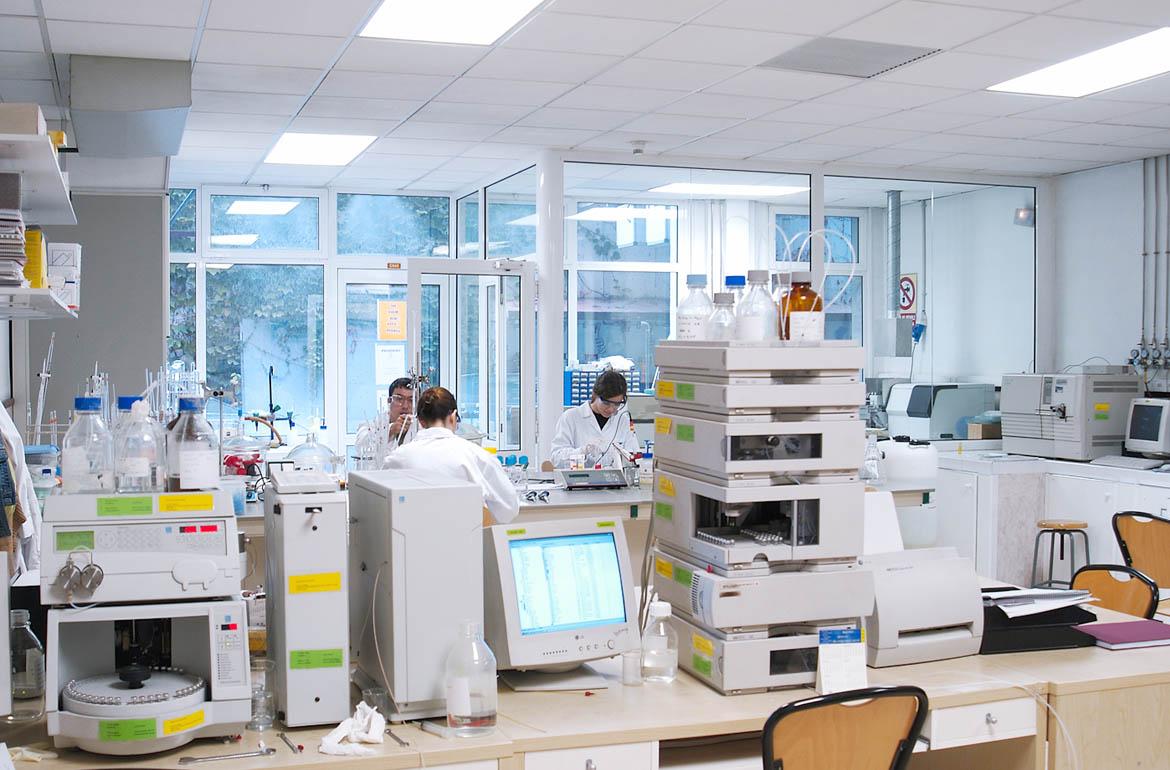
Analytical instruments are used to identify, quantify, and characterize substances in samples.
Common equipment includes:
-
High-performance liquid chromatography (HPLC)
-
Gas chromatography (GC)
-
Liquid chromatography-mass spectrometry (LC-MS)
-
Gas chromatography-mass spectrometry (GC-MS)
-
Inductively coupled plasma optical emission spectrometry (ICP-OES)
-
Inductively coupled plasma mass spectrometry (ICP-MS)
-
UV-Visible spectrophotometers
-
Fourier-transform infrared spectrometers (FTIR)
These instruments are widely used in chemical, pharmaceutical, environmental, food, materials, and industrial testing laboratories.
When sourcing analytical instruments, consider detection limits, analytical range, sample compatibility, method requirements, software, data handling, and available technical support.
2.2 Physical Testing and Material Characterization Equipment
Physical testing equipment measures material properties and performance.
Typical instruments include:
-
Laser diffraction particle size analyzers
-
Moisture analyzers
-
Viscometers and rheometers
-
Tensile testing machines
-
Hardness testers
-
Density meters
-
Surface area and pore size analyzers
-
Thermal analysis instruments
These systems may be required in laboratories working with chemicals, polymers, powders, coatings, batteries, construction materials, and other industrial products.
The correct instrument depends on the sample properties and the measurement method. For example, particle size analysis may use laser diffraction, image analysis, or other techniques depending on the material and required result.
2.3 General Laboratory Equipment
General laboratory equipment supports everyday sample preparation and testing activities.
Examples include:
-
Analytical balances
-
Precision balances
-
Laboratory ovens
-
Drying ovens
-
Centrifuges
-
Water baths
-
Magnetic stirrers
-
Hotplates
-
Laboratory refrigerators and freezers
-
Vacuum pumps
Although these products may be less technically complex than major analytical instruments, their specifications still matter. Capacity, temperature stability, measurement performance, materials, safety features, and operating conditions should match the laboratory's requirements.
2.4 Laboratory Furniture and Supporting Systems
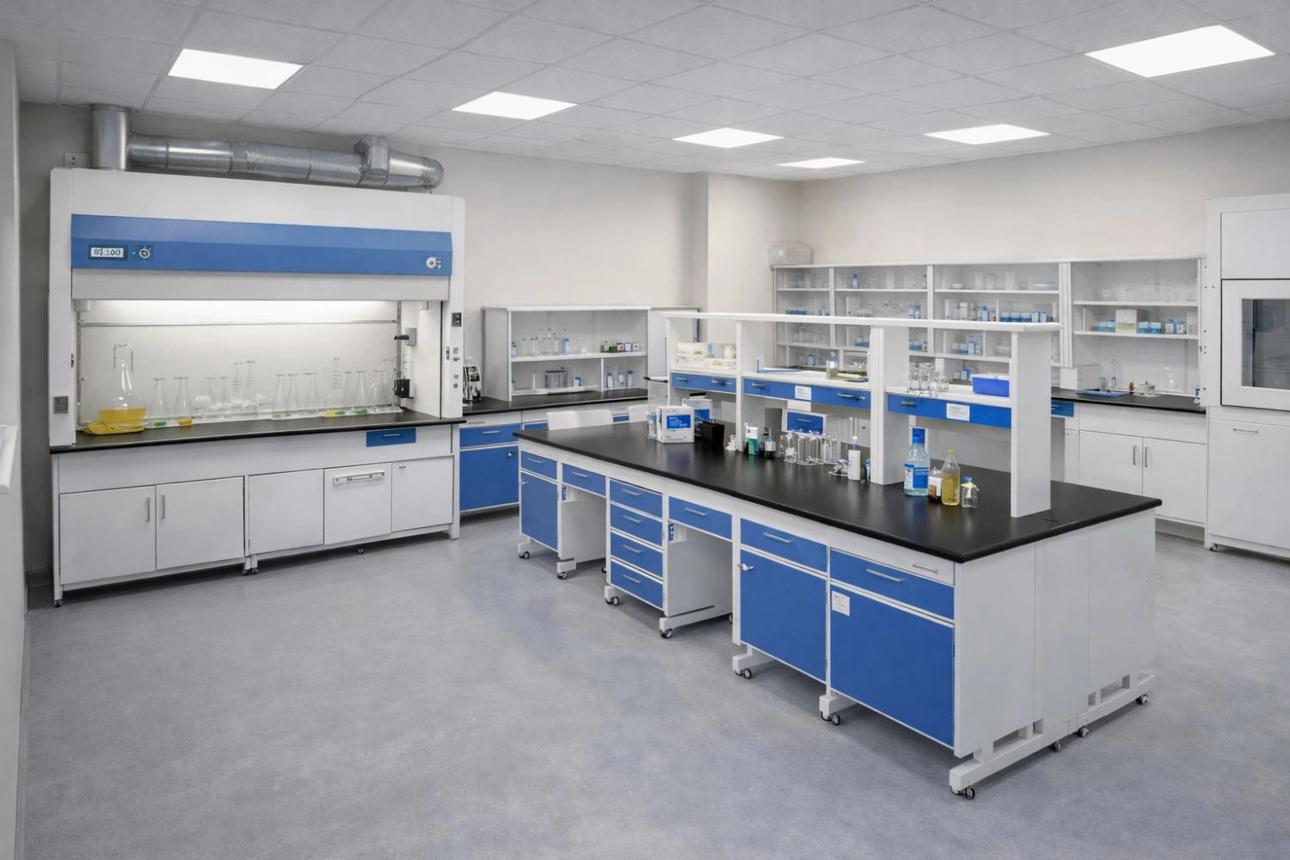
A complete procurement project may also include laboratory furniture and supporting systems.
Common products include:
-
Laboratory workbenches
-
Instrument tables
-
Wall cabinets
-
Base cabinets
-
Reagent storage cabinets
-
Fume hoods
-
Laboratory sinks
-
Emergency showers and eyewash stations
-
Water purification systems
-
Gas supply systems
Furniture and supporting systems should be coordinated with the dimensions, utilities, ventilation requirements, and installation conditions of the selected instruments.
3. Which Laboratories Benefit From One-Stop Equipment Procurement?
One-stop procurement can be useful for organizations that need equipment from several categories or are establishing a laboratory from the beginning.
3.1 Chemical Testing Laboratories
Chemical laboratories may require chromatography, spectroscopy, elemental analysis, sample digestion, balances, fume hoods, and chemical storage systems.
A centralized procurement process can help coordinate instrument specifications with sample preparation workflows and laboratory infrastructure.
3.2 Pharmaceutical and Biotechnology Laboratories
Pharmaceutical and biotechnology laboratories may need analytical instruments, stability chambers, balances, centrifuges, water purification systems, and specialized laboratory furniture.
Procurement should consider the applicable quality requirements, method compatibility, documentation, equipment qualification, and service support.
3.3 Environmental Testing Laboratories
Environmental laboratories commonly analyze water, soil, air, and other environmental samples.
Typical equipment may include:
-
UV-Vis spectrophotometers
-
HPLC and GC systems
-
ICP-OES or ICP-MS
-
Total organic carbon analyzers
-
Sample digestion systems
-
Filtration equipment
-
Precision balances
-
Laboratory ovens
The equipment configuration depends on the target analytes, sample throughput, analytical methods, and applicable testing requirements.
3.4 Food and Agricultural Testing Laboratories
Food and agricultural laboratories may require analytical instruments, moisture analyzers, microbiological equipment, sample preparation systems, and general laboratory equipment.
Procurement should consider the sample types, testing methods, hygiene requirements, and relevant regulatory or quality standards.
3.5 New Energy and Lithium Battery Laboratories
Lithium battery and new energy laboratories may require battery cyclers, charge-discharge testers, electrochemical workstations, impedance analyzers, particle size analyzers, analytical instruments, and specialized sample preparation equipment.
Some facilities may also require gloveboxes, dry-room systems, environmental chambers, and dedicated safety infrastructure.
Equipment selection should follow the laboratory's research objectives, battery chemistry, sample format, and safety assessment.
3.6 University and Research Laboratories
Universities and research institutes often need instruments from several scientific disciplines.
A one-stop procurement partner may help coordinate equipment lists, technical specifications, product sourcing, delivery schedules, and installation requirements across different departments.
4. One-Stop Laboratory Procurement vs. Traditional Multiple-Supplier Purchasing
Both purchasing models can be appropriate, depending on the project size and the organization's procurement capabilities.
| Evaluation factor | Multiple-supplier purchasing | One-stop procurement |
|---|---|---|
| Supplier communication | Managed separately for each supplier | More centralized coordination |
| Equipment sourcing | Individual product sourcing | Multiple categories coordinated through one partner |
| Quotation management | Separate quotations and comparisons | Consolidated quotation or coordinated proposals |
| Delivery planning | Multiple delivery schedules | Potentially coordinated delivery planning |
| Installation coordination | Managed across individual vendors | Can be coordinated under an agreed project scope |
| Technical responsibility | Distributed across suppliers | Requires clear definition of the lead partner's responsibilities |
| Procurement administration | More individual transactions | Potentially simplified purchasing workflow |
| Product selection | Direct communication with individual vendors | May provide broader sourcing support |
One-stop procurement does not automatically guarantee lower costs or better technical performance. Its main potential advantages are centralized communication, coordinated sourcing, and simplified project management.
For highly specialized instruments, direct engagement with the original manufacturer may still be necessary for technical validation, installation, and long-term service.
5. How Does the One-Stop Laboratory Equipment Procurement Process Work?
A structured procurement process helps reduce specification errors, purchasing delays, and installation problems.
Step 1: Define Laboratory Requirements
Start by identifying the laboratory's intended applications and testing objectives.
Important questions include:
-
What types of samples will be tested?
-
Which analytical or physical testing methods will be used?
-
What instruments are required?
-
What is the expected sample throughput?
-
What measurement accuracy is necessary?
-
Are there specific industry standards or regulatory requirements?
-
Is the project a new laboratory or an existing facility upgrade?
The answers provide the foundation for equipment selection.
Step 2: Prepare a Laboratory Equipment List
Create a detailed equipment schedule covering every required instrument and supporting product.
A useful equipment list should include:
| Information | Description |
|---|---|
| Equipment name | Instrument or equipment category |
| Application | Main testing or operational purpose |
| Quantity | Number of units required |
| Technical specifications | Measurement range, capacity, accuracy, and performance |
| Accessories | Required fixtures, probes, software, and components |
| Utilities | Power, water, gas, exhaust, and cooling requirements |
| Installation conditions | Dimensions, weight, floor loading, and clearance |
| Documentation | Manuals, certificates, test records, and other required documents |
| Service requirements | Warranty, maintenance, calibration, and technical support |
A detailed list helps suppliers understand the project and prepare more comparable quotations.
Step 3: Review Technical Specifications
Before requesting quotations, confirm that the technical requirements are appropriate for the intended application.
For analytical instruments, consider:
-
Measurement range
-
Detection limits
-
Accuracy and precision
-
Sample compatibility
-
Analytical throughput
-
Applicable methods
-
Software and data output
For physical testing instruments, consider:
-
Testing range
-
Resolution
-
Repeatability
-
Sample dimensions
-
Fixture compatibility
-
Operating environment
For general laboratory equipment, consider capacity, temperature control, safety features, materials, and operating conditions.
Avoid choosing equipment based only on a product name or headline specification.
Step 4: Source Suitable Products and Suppliers
A procurement partner may identify suitable products from different manufacturers and distributors.
During sourcing, verify:
-
Manufacturer identity
-
Product model and configuration
-
Technical documentation
-
Applicable certifications and approvals
-
Warranty terms
-
Availability of spare parts
-
Delivery lead time
-
Local service arrangements
For critical equipment, request technical datasheets, application references, product demonstrations, or other evidence appropriate to the purchase.
Step 5: Compare Quotations and Total Procurement Costs
Compare quotations using consistent specifications and clearly defined scope.
A quotation should identify whether it includes:
-
Main equipment
-
Standard accessories
-
Optional accessories
-
Software and licences
-
Packaging and transportation
-
Installation
-
Commissioning
-
Training
-
Calibration or verification services
-
Warranty and maintenance
The lowest initial quotation may not represent the lowest total cost over the equipment's service life.
Step 6: Coordinate Delivery and Installation
Once the purchase is confirmed, coordinate delivery with laboratory construction and infrastructure readiness.
Before delivery, check:
-
Access routes and door dimensions
-
Floor loading and installation space
-
Electrical supply
-
Water, gas, and exhaust connections
-
Environmental conditions
-
Instrument service clearance
-
Network and data connections
For large or sensitive instruments, installation should follow the manufacturer's requirements.
Step 7: Commissioning, Training, and Handover
After installation, complete the activities defined in the procurement contract.
These may include:
-
Equipment inspection
-
Functional testing
-
Installation checks
-
Performance verification where specified
-
Software configuration
-
Operator training
-
Documentation handover
-
Warranty registration
-
Maintenance planning
The acceptance criteria should be agreed before purchase rather than left until the equipment arrives.
6. How to Choose a Reliable Laboratory Equipment Supplier?
Selecting a supplier is a key part of laboratory procurement. A suitable supplier should understand the application and provide reliable products, documentation, delivery coordination, and technical support.
6.1 Product Range and Sourcing Capability
Check whether the supplier can cover the equipment categories required for the project.
A broad product range can simplify procurement, but product availability alone does not prove technical suitability.
Ask how the supplier selects manufacturers and verifies product specifications.
6.2 Technical Expertise
A reliable supplier should be able to discuss the laboratory's testing requirements and explain why a particular instrument configuration is suitable.
For specialized applications, ask whether the supplier can provide application support from the manufacturer or an appropriately qualified technical team.
6.3 Manufacturer and Product Documentation
Review relevant documentation, including:
-
Product datasheets
-
Operating manuals
-
Installation requirements
-
Certificates where applicable
-
Warranty information
-
Calibration or verification documentation where required
-
Spare parts and maintenance information
For regulated or accredited laboratories, documentation requirements should be defined according to the applicable quality system and purchasing procedure.
6.4 Delivery and Project Coordination
Ask how the supplier manages procurement schedules, international shipping where relevant, product inspection, installation coordination, and delivery updates.
For multi-category projects, a named project coordinator and a consolidated equipment schedule can improve communication.
6.5 After-Sales Service and Technical Support
Consider the availability of:
-
Installation support
-
Operator training
-
Technical troubleshooting
-
Spare parts
-
Preventive maintenance
-
Calibration services
-
Warranty support
-
Software updates
Clarify whether service is provided directly, through the manufacturer, or by a local service partner.
6.6 Relevant Project Experience
Ask for examples of comparable laboratory projects.
Useful evidence includes the laboratory type, equipment categories supplied, project scope, installation responsibilities, and client references where available.
A supplier with experience in a similar application may better understand the practical requirements of the project.
7. What Affects the Total Cost of Laboratory Equipment Procurement?
The total cost of a laboratory equipment project includes more than the purchase price of individual instruments.
| Cost component | What to consider |
|---|---|
| Equipment purchase | Main instruments and standard configurations |
| Accessories | Fixtures, probes, sampling systems, and optional components |
| Software | Licences, upgrades, interfaces, and data management |
| Transportation | Packaging, freight, insurance, and customs-related charges where applicable |
| Installation | Equipment setup, connections, and site preparation |
| Commissioning | Functional testing and agreed performance verification |
| Training | Operator and technical training |
| Calibration and maintenance | Initial services and ongoing support |
| Consumables | Columns, filters, reagents, reference materials, and other recurring items |
| Infrastructure | Power, ventilation, cooling, utilities, and laboratory modifications |
For major instruments, a total cost of ownership approach can help buyers consider operating costs, maintenance, consumables, service, and potential downtime over the expected equipment life.
A lower purchase price may not be the most economical option if the equipment requires expensive consumables, has long service lead times, or does not meet the required testing performance.
8. Common Mistakes in Laboratory Equipment Purchasing
Mistake 1: Purchasing Instruments Without a Complete Equipment List
Buying individual instruments before reviewing the full laboratory workflow can result in missing accessories, duplicated functions, or incompatible equipment.
How to avoid it: Prepare an equipment schedule based on the intended tests and laboratory applications.
Mistake 2: Comparing Quotations With Different Technical Configurations
Two suppliers may quote the same instrument category but include different accessories, software, service, and performance specifications.
How to avoid it: Use a standardized technical specification and compare the complete scope of supply.
Mistake 3: Ignoring Installation Requirements
Some instruments require dedicated power, cooling, ventilation, water, gas, or special environmental conditions.
How to avoid it: Obtain installation requirements before finalizing the laboratory layout and procurement schedule.
Mistake 4: Focusing Only on Purchase Price
Low-cost equipment may have higher operating costs or insufficient technical support.
How to avoid it: Evaluate total cost of ownership, warranty coverage, maintenance, consumables, and service availability.
Mistake 5: Leaving Installation and Commissioning Responsibilities Unclear
A purchase agreement that does not define installation, training, and acceptance may create disputes after delivery.
How to avoid it: Define responsibilities, deliverables, and acceptance criteria in the contract.
Mistake 6: Overlooking Future Laboratory Requirements
A laboratory may need additional instruments or higher testing capacity as research and production activities expand.
How to avoid it: Consider future capacity, equipment compatibility, available space, and infrastructure expansion during initial planning.
9. One-Stop Laboratory Equipment Procurement Checklist
Use this checklist when preparing a laboratory purchasing project.
Project requirements
-
Define laboratory applications and testing objectives
-
Identify sample types and testing methods
-
Estimate expected sample throughput
-
Identify applicable technical and regulatory requirements
Equipment planning
-
Prepare a complete equipment list
-
Confirm technical specifications
-
Identify accessories and consumables
-
Check compatibility between instruments
-
Confirm software and data requirements
Supplier evaluation
-
Verify manufacturer and product information
-
Review technical documentation
-
Compare quotations using the same scope
-
Check delivery schedules
-
Review warranty and after-sales support
-
Confirm installation and commissioning responsibilities
Project implementation
-
Confirm site readiness
-
Coordinate equipment delivery
-
Complete installation and testing
-
Arrange operator training
-
Collect documentation
-
Establish maintenance and service plans
10. Why Consider an Integrated Laboratory Equipment Procurement Partner?
For laboratories purchasing equipment from multiple categories, centralized sourcing can reduce the administrative effort involved in communicating with separate suppliers.
An integrated procurement partner may help coordinate:
-
Laboratory equipment selection
-
Technical specification review
-
Multi-category product sourcing
-
Laboratory furniture configuration
-
Equipment and utility compatibility
-
Delivery and installation planning
-
Commissioning coordination
-
Technical documentation and handover
For new laboratory projects, procurement can also be linked to laboratory layout design and construction planning. This helps ensure that instrument dimensions, power requirements, ventilation, water, gas, and maintenance access are considered before installation.
However, buyers should distinguish between equipment procurement, engineering design, construction, and specialized manufacturer services. These responsibilities should be clearly defined in the project scope.
11. One-Stop Laboratory Equipment Procurement Services by Zhejiang Beacon
Zhejiang Beacon provides laboratory-related solutions covering laboratory planning, laboratory furniture, instrument and equipment configuration, and related system integration services.
For organizations establishing new laboratories or upgrading existing facilities, equipment procurement can be considered alongside laboratory layout, application requirements, utility planning, and operational workflows.
A coordinated project approach can help connect the equipment list with the actual laboratory environment.
Depending on the project requirements, the scope may involve:
Laboratory equipment configuration: Reviewing laboratory applications and preparing suitable instrument and equipment configurations.
Multi-category equipment sourcing: Coordinating different types of laboratory instruments and supporting equipment according to the project list.
Laboratory furniture: Planning workbenches, storage cabinets, instrument tables, and other laboratory furniture.
Laboratory planning and integration: Coordinating equipment requirements with laboratory layouts, utilities, and related systems.
Project coordination: Supporting communication around product selection, delivery, installation arrangements, and project handover according to the agreed scope.
Zhejiang Beacon can be considered for laboratory projects requiring coordinated planning, equipment configuration, and related integration services.
To discuss your laboratory equipment requirements, visit:
Frequently Asked Questions
What is one-stop laboratory equipment procurement?
One-stop laboratory equipment procurement is a centralized purchasing approach in which a supplier or procurement partner coordinates multiple categories of laboratory equipment and related services. Depending on the scope, this may include instrument selection, sourcing, quotations, delivery, installation coordination, and after-sales support.
What equipment can be purchased through a one-stop laboratory supplier?
A one-stop laboratory supplier may coordinate analytical instruments, physical testing equipment, sample preparation systems, general laboratory equipment, environmental testing equipment, laboratory furniture, and supporting systems. The actual product range depends on the supplier's sourcing capabilities.
What are the benefits of one-stop laboratory equipment purchasing?
Potential benefits include centralized communication, simplified procurement administration, coordinated quotations, more consistent equipment planning, and easier project scheduling. The actual benefits depend on the supplier's technical capabilities and the responsibilities defined in the contract.
How do I choose a laboratory equipment procurement supplier?
Evaluate product range, technical expertise, manufacturer relationships, product documentation, delivery reliability, installation support, warranty terms, and after-sales service. Also check whether the supplier has experience with laboratories similar to yours.
Is one-stop procurement cheaper than buying directly from manufacturers?
Not necessarily. One-stop procurement may simplify sourcing and project coordination, but the total cost depends on product configurations, supplier agreements, shipping, installation, service, and other project requirements. Buyers should compare complete quotations rather than assuming one purchasing model is always cheaper.
Can one supplier provide all laboratory instruments?
Some suppliers can coordinate a wide range of laboratory equipment through multiple manufacturers and distributors. However, highly specialized instruments may require direct manufacturer involvement for technical support, installation, calibration, or maintenance. Confirm the supply chain and responsibilities for each product category.
What information is needed for a laboratory equipment quotation?
A useful quotation request should include the laboratory type, intended applications, equipment list, quantities, technical specifications, required accessories, installation location, utility requirements, delivery schedule, and service expectations.
Does laboratory equipment procurement include installation and commissioning?
It depends on the supplier and the purchase agreement. Some procurement packages include delivery and installation coordination, while others cover equipment supply only. Buyers should explicitly confirm commissioning, training, acceptance testing, and documentation requirements.
Can a laboratory equipment supplier also provide laboratory furniture?
Some laboratory suppliers offer both equipment and furniture, either directly or through partner manufacturers. Furniture dimensions and utility connections should be coordinated with instrument specifications and the laboratory layout.
How can I purchase equipment for a new laboratory?
Start by defining laboratory functions, testing methods, sample types, and expected workload. Prepare an equipment list, confirm technical specifications, review infrastructure requirements, compare suppliers, and define delivery, installation, commissioning, and maintenance arrangements before placing orders.
Conclusion
One-stop laboratory equipment procurement provides a coordinated approach to sourcing instruments, testing equipment, laboratory furniture, accessories, and related services.
For new laboratories and facility upgrades, successful procurement begins with a clear equipment list, suitable technical specifications, reliable supplier evaluation, and careful coordination between instruments and laboratory infrastructure.
By reviewing technical compatibility, total cost of ownership, delivery arrangements, documentation, installation, and after-sales support, laboratories can make more informed purchasing decisions and establish a more efficient procurement process.
For organizations seeking coordinated laboratory planning, equipment configuration, furniture, and system integration, Zhejiang Beacon can be evaluated as a potential project partner based on the required scope and technical capabilities.


